
Join the lab
Two graduate positions, starting Fall 2027
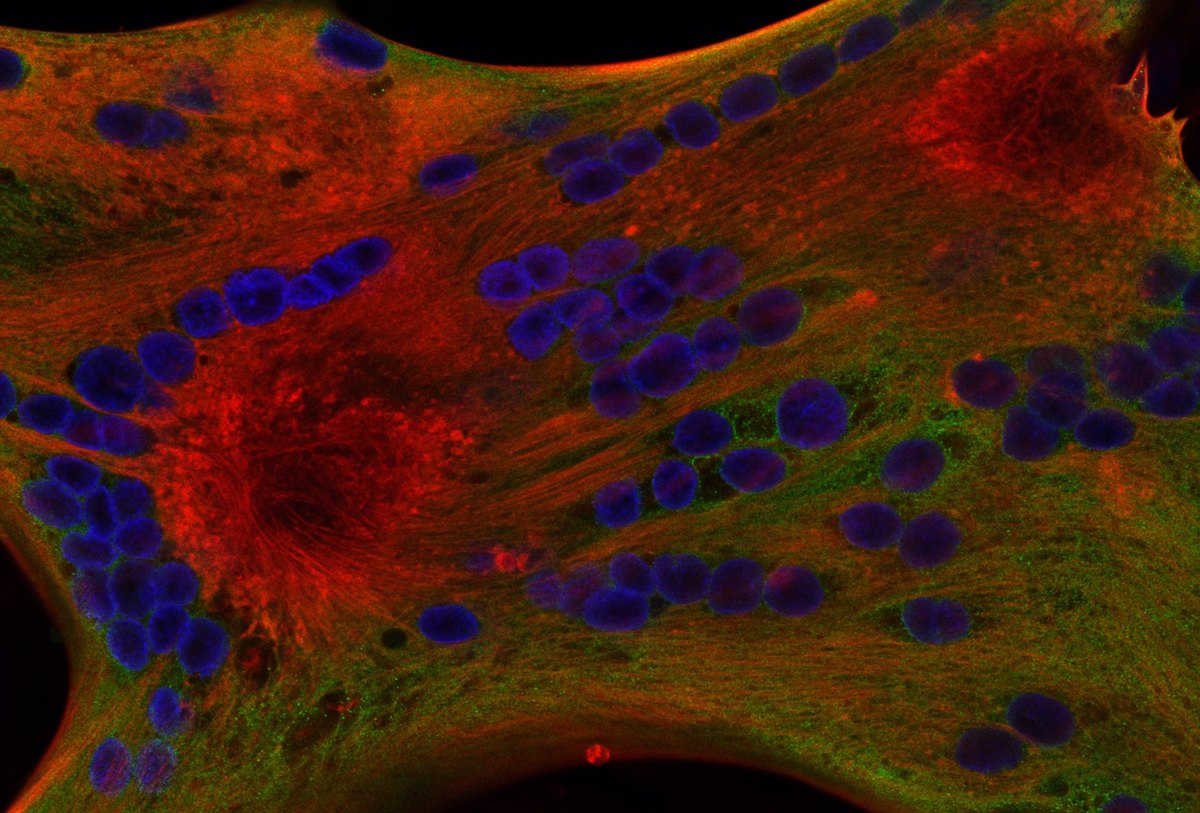
Duchenne muscular dystrophy. This is the position we are most actively seeking. Human muscle cell culture, organoids and mouse ex vivo physiology. The question is how calcium handling goes wrong in dystrophic muscle, and what mechanical load does to it. Smooth muscle is the newest part of this. It is affected in patients, in the gut, the bladder and the vasculature, and almost nobody studies it. We are characterizing healthy human smooth muscle now and building the dystrophic counterpart, so a student arriving in Fall 2027 starts after the characterization and before the biology. It suits someone who wants to work with cells and tissue. It also suits someone willing to build a measurement when none exists.
Magnetic orientation. How a nervous system detects the Earth's magnetic field. We are open to this position for the right person. The emphasis has to be the molecular and physiological mechanism, rather than behavior alone. Expect genetics, calcium imaging and electrophysiology. Nobody in the lab is currently on this question, so whoever takes it has it to themselves.
One position is a PhD and the other is an MS. If your interests sit near either of these rather than squarely on them, write anyway. Say what you want to work on, and say which degree you are after.
Fertile ground
I tell every student the same thing. This lab is fertile ground. The questions we work on, how living things sense the physical world and act on it, and what happens when that loop breaks, are rich enough that a bright, hardworking student will never run out of something real to do, and the lab is set up so that what you do becomes something you can show. Since 2015, 230 people have trained here. Four in ten of our undergraduates have left with a poster they presented themselves, one in six with their name on a peer reviewed paper, and some have given talks. Of the ten graduate students who have finished a degree here, every one is an author on at least one paper, and a doctoral student leaves with around four papers and nearly thirty presentations. Seventeen of the twenty three papers the lab has published since 2015 have a trainee as first author, two of them high school students. Of the alumni whose path we can trace, nearly nine in ten stayed in science. You can check all of this: the papers, the presentations and the alumni are on this site, by name.
None of that happens to you by joining. It happens to the people who come in wanting it and do the work, and in this lab, as in every field anyone has measured, a minority of people produce most of what gets made. What I can promise is that the door is open wider here than in most places, and that when you walk through it you will find the questions, the instruments, the mentoring and the time you need to show what you can do. The alumni page is the proof that it has been true for others. Whether it is true for you is the part that is yours.
Where the lab's weight sits, plainly
Duchenne muscular dystrophy carries most of the lab's people and most of its funding. Most candidates arrive wanting to work on it, and our recruiting is weighted there. The sensory and magnetic side has produced a comparable share of our publications, with a fraction of the hands. It is thin rather than finished. A crowded, well supported project and a question you would largely have to yourself are both on offer here. They are not the same experience. We would rather you chose with that in front of you.
You will build things
Our questions tend to need instruments that do not exist, or that cost more than we can justify. So the lab builds them. Behavioral assays. A worm tracker costing about thirty dollars. Magnetic field hardware. The RGBCaMP reporter animal. And WINK, the imaging and kinematics platform the lab now runs on. About a fifth of what we publish is a tool, an assay or a method rather than a result. You do not need to arrive knowing how to do any of that. You should find the prospect interesting rather than alarming. The alternative to building the instrument is usually not doing the experiment.
Being seen, not only being good
Being excellent and being noticed are different things, and the second one is not automatic. A small university turns out to be good at the second. There are more ways to be highlighted here than at a large institution, and fewer people competing for each of them. Our students win poster awards, place in image of research competitions, and hold internal grants. Writing those internal grants is not optional in this lab. Every graduate student applies, which secures their summer funding and gives them a funded proposal on their record before they finish. Students here commonly graduate with several accolades, and each one is another place where somebody outside the lab has put their name in writing.
What we are looking for
Previous research experience, by whatever route. And the habit of following a question without being chased. The most useful thing you can tell us in a first email is simple. What was the last thing you did at a bench, or built, that nobody asked you to do?
Both positions are supported. Funding comes from research assistantships on grant funds, and from teaching assistantships through the School of Biological Sciences. We will tell you plainly which you are being offered, and for how long, before you commit to anything.
How to write
Email avidal@ilstu.edu. Say which of the two directions interests you, and why. Say what you have done, and what you want to be able to do by the end. A CV helps. A generic letter addressed to no lab in particular does not.
Writing first is not optional. The program does not admit students who have not secured a host lab, so the email comes before the application. Deadlines and requirements are below.
Questions people ask, and some they do not
Open whichever apply to you. These are the answers we would give by email anyway.
Do I need experience with C. elegans?
No. The lab runs worms, human muscle cell lines, and from 2027 mouse ex vivo preparations. The Duchenne position is mostly cells and tissue rather than worms. What matters is that you have worked on something at a bench and know what it feels like when an experiment does not cooperate.
What would I actually be doing in the first year?
A defined piece of work that can be finished, alongside coursework and learning the instruments the lab runs on. New people here get a narrow, tractable scope on purpose. A first project that cannot be completed teaches you very little, and an open ended one is the most common way a good student stalls. The scope widens once you have landed one result of your own.
What if I have never built an instrument?
Almost nobody arrives having built one. The worm tracker costs about thirty dollars and is a reasonable first build. What we are looking for is your reaction to the idea. If the prospect of making the thing you need sounds interesting rather than alarming, you will be fine.
I am not sure whether I want an MS or a PhD.
Say so in your first email. We have one of each, so the question is live rather than awkward. An MS here is a complete piece of research with a defense, and it is a working route into a PhD elsewhere. Four of our graduate alumni went on to doctoral programs, including at the University of California San Diego and Loyola University Chicago. Choosing the longer degree because it seems more serious is a poor reason, and we would rather talk about it before you apply than two years in.
Illinois State is not an R1. Does that matter?
It changes some things and not others. The cohort is small, so you work with the PI directly rather than through a layer of postdocs, and you use the instruments instead of queuing for them. We have fewer core facilities than a large research university, which is part of why we build our own.
The output is the part worth checking rather than taking on faith. Ten students have completed a graduate degree in this lab. Graduate students here generate a median of fifteen outputs, counting posters, conference talks and peer reviewed papers. A master's student typically leaves with around thirteen presentations and one or two papers. A doctoral student leaves with around twenty seven presentations and four papers. That runs at three to four outputs per year in the lab. Every one of the ten is an author on at least one peer reviewed paper and at least one poster. Seventeen of the twenty three papers published since 2015 have a lab trainee as first author, two of them high school students. Preprints and software releases are counted separately, and several students have those as well.
We treat that record as the point rather than a by-product. An output is the durable, externally checkable evidence that you finished something, and which outputs matter depends on where you are going. For research positions it is papers and presentations. For teaching it is the mentoring and instruction you have actually done, which is why our students mentor undergraduates and high school researchers rather than only being mentored. We count conference talks as well as posters, because giving a talk means a student was far enough along to stand up and hold a room, which is a different skill from producing a result. The publication list and the posters and talks are both public, so you can count for yourself. Not everyone who begins a graduate degree finishes one, here or anywhere, so those are the people who completed rather than everyone who passed through.
As for where people go, a former undergraduate from this lab took a PhD at Harvard and is a postdoctoral fellow there, one graduate alumna is a postdoctoral fellow at Scripps Research, and another takes up an assistant professorship in 2027. Across all alumni whose destination we know, 89.1 percent continued in STEM.
One figure is worth knowing before you weigh the question. Laboratories here publish about as much per investigator as laboratories at research intensive universities. Across six large research universities the figure runs between five and ten articles per senior investigator over the past decade, and at Illinois State it is about seven. The gap in total output between the two kinds of institution is mostly a difference in how many laboratories there are, not in what each one produces. The alumni page is there so you can check our side of it rather than take our word for it.
Who pays me, and for how long?
Every admitted student is supported, through a teaching assistantship, a research assistantship, or both, for as long as they continue to meet the program's requirements. Research assistantships come from grant funds and teaching assistantships through the School of Biological Sciences. Most students see both over the course of a degree. We will tell you which you are being offered, and for how long, before you commit to anything.
How do I actually apply, and when?
Write to me first. That is a prerequisite rather than a courtesy. The program does not admit a student without a faculty member willing to host them, so the email has to happen before the application is worth submitting. The application itself goes to the School of Biological Sciences, and the admission decision belongs to the program rather than to me. What I control is whether there is a place in this lab.
The deadline for a fall start is 1 February, so a Fall 2027 start means 1 February 2027. You will need transcripts, a CV, a two page statement of goals and three letters. The GRE is optional and carries little weight. The stated minimum is a 3.0 grade point average over your last sixty undergraduate hours, and the doctoral program expects considerable prior research experience, whether from a master's, undergraduate research or elsewhere.
International applicants: the department has a large international contingent, so this is routine here rather than exceptional, and the support described above applies in the same way. You will also submit an English proficiency score unless you qualify for a waiver. Requirements change, so check the program pages for the current version: MS in Biological Sciences and PhD in Biological Sciences.
Undergraduate research
We take undergraduates continuously, and we particularly encourage sophomores and juniors. Students typically give about ten hours a week. They are trained across the whole project rather than handed one technique. That means reading the literature, designing the experiment, running it, analyzing it, and presenting it. Most of our undergraduates present posters, and a good number co-author papers. Research hours can be taken for credit through BSC 290 or BSC 299.
What we commit to in return
The lab publishes what it expects of people, and what they can expect back, at every level. We also publish the individual development plans, which we actually fill in. These are the documents a new member reads before starting.
- Graduate expectations (PDF)
- Graduate individual development plan (PDF)
- Undergraduate expectations (PDF)
- Undergraduate individual development plan (PDF)
Who has come through here
226 people have trained in this lab since 2015. Of the alumni whose destination we know, 89.1 percent continued in STEM. We know where 81 percent of them went. One former graduate student takes up a faculty position in 2027. The alumni page lists where people went. That is the question worth asking of any lab you are considering.