
People
Eleven people are working in the lab this semester, on parts of one problem rather than on eleven problems, with one more joining in the spring.
The work interlocks by design. Mackenzie acquires the calcium recordings. Keke curates them against WINK, using the modules Chandler writes. Marcos is building the edited cell line the calcium work needs, so that anything found can be attributed to dystrophin. He and Nora score the same muscle cells independently, so human and machine can be compared. Naga is asking in smooth muscle the question Danny answered in striated. That is why people here appear on each other's papers.
Portraits are painted rather than photographed, a house style we adopted so that everyone appears the same way.
Principal investigator
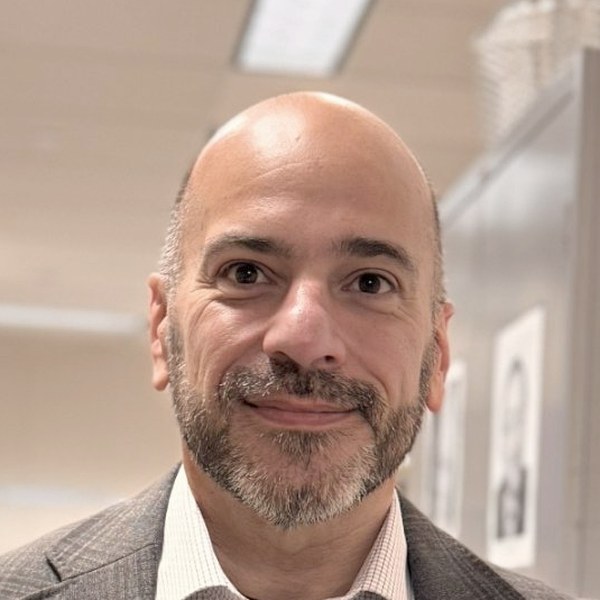 Andrés Vidal-Gadea, PhD
Professor of Molecular Neuroethology. Graduate Program Coordinator for
the Physiology, Neuroscience and Behavior sequence. Works at the join between biology and physics. How does a genetic
lesion change muscle's ability to withstand mechanical load, and how does a nervous
system read a magnetic field? Outstanding University Researcher 2025, Outstanding College
Researcher 2024, Faculty Mentor Award from the Louis Stokes Alliance for Minority
Participation 2018. Curriculum vitae (PDF).
Graduate students
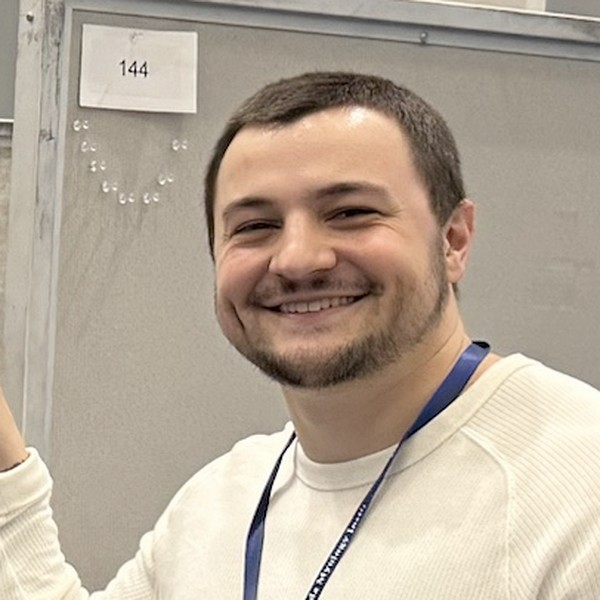 Damiano Marchiafava, PhD
Defended October 2026, in the lab through December. Built the lab's
human muscle cell branch from nothing. He taught himself culture, differentiation and
editing of human muscle cells. His dissertation covers the calcium set point of
dystrophic muscle, and the fibrillin related proteins that help hold it. He also served
as head TA for introductory biology labs.
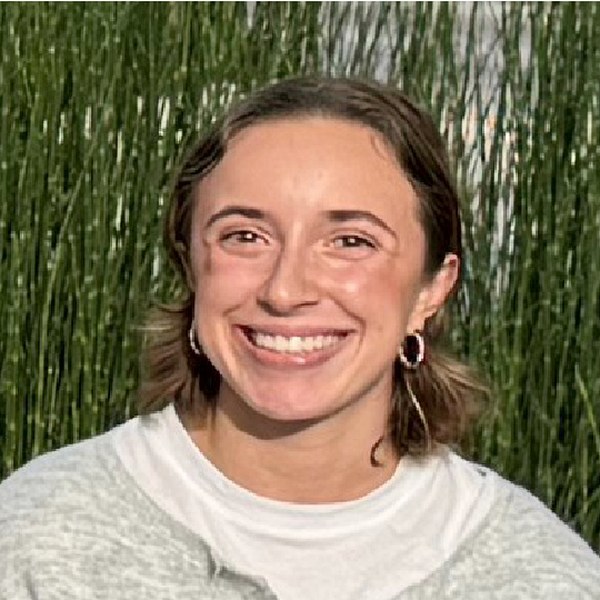 Mackenzie Jones
MS candidate and the lab's lead worm person. Runs the multi-channel
live calcium imaging on the confocal. Owns the RGBCaMP reporter work, comparing calcium
kinetics across muscle compartments in healthy and dystrophic animals. Carries the
dystrophin isoform experiments, and has begun mouse muscle dissection.
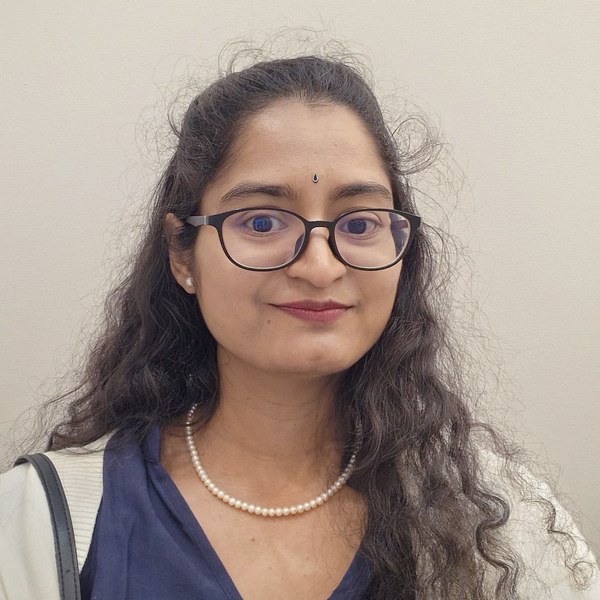 Naga Nidadavolu
Graduate student on smooth muscle, in both human cells and the worm.
Runs calcium imaging of smooth muscle myoblasts under pharmacological stimulation. Her
question is whether the calcium defects found in striated muscle appear in smooth muscle
too. Smooth muscle is the newest arm of the program.
Undergraduate researchers
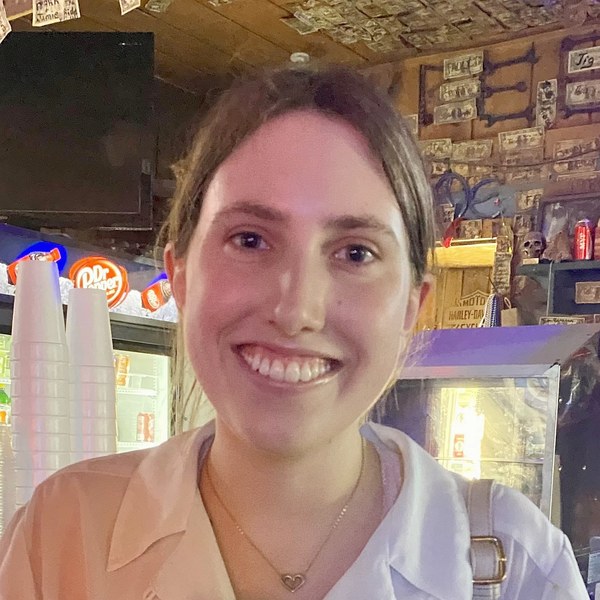 Nora Armstrong
Co-author on the study of animals raised for six generations under
Mars analog gravity and hypomagnetic fields. She ran its revision experiments. She now
outlines muscle cells for the lab's human to machine comparison.
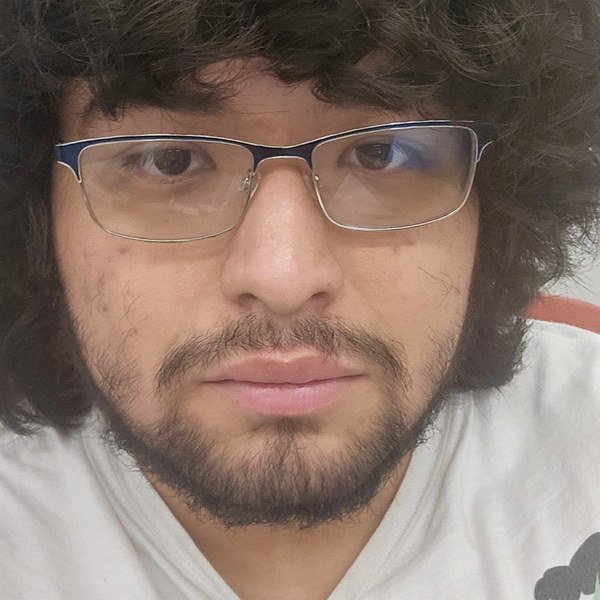 Marcos Perez-Rodriguez
Using CRISPR to build an isogenic dystrophic human muscle cell line.
It starts from the same healthy line used in the lab's calcium set point work, so the two
differ in one gene and nothing else. He is also an independent scorer on the muscle cell
manuscript.
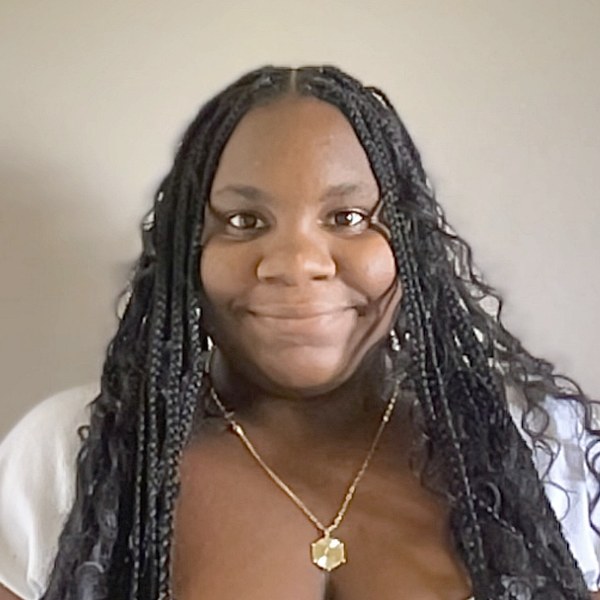 Keke Velez
Runs the worm hotel, filming single animals performing distinct
muscle specific behaviors, and curates the resulting recordings against WINK's output,
correcting frames the machine gets wrong. Ran an RNA interference screen for
genes that alter branching in muscle.
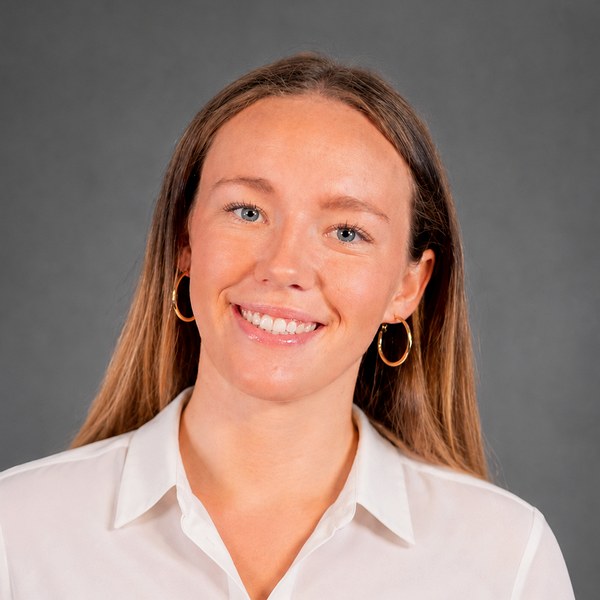 Chandler Huffman
Writes the lab's Python worm tracker and WINK analysis modules. She is
writing the technical manuscript describing them, as first author. A Division I student-athlete,
heading for a PhD in biomedical engineering.
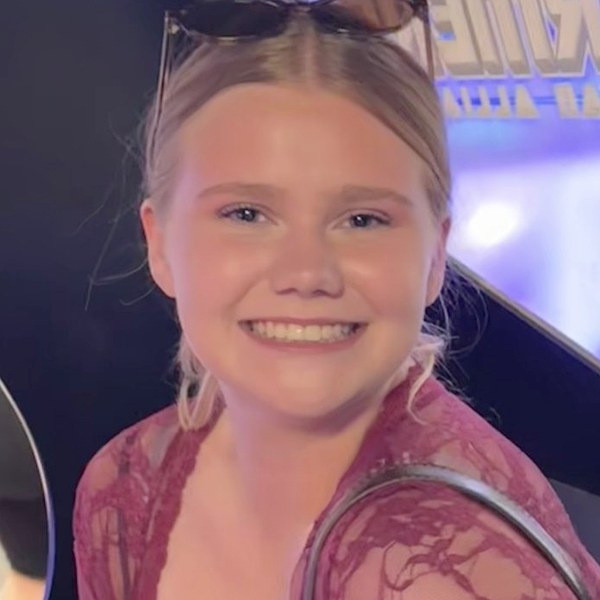 Brooke Stewart
Working on rescue of a calcium pump in dystrophic animals. She
designed the long range PCR primers that amplify the genomic locus for the rescue
construct.
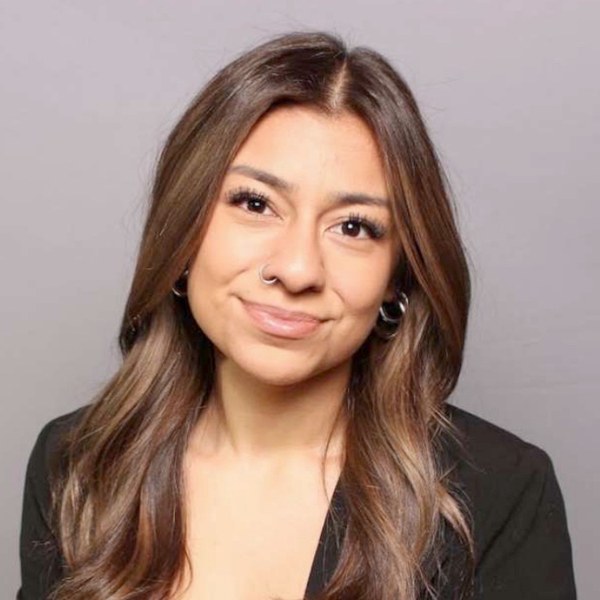 Angelina Vera
Undergraduate researcher on the Duchenne muscular dystrophy
program.
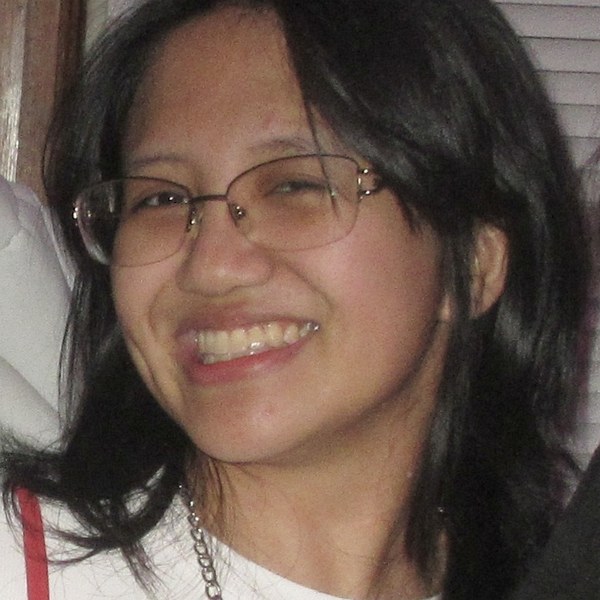 Elyssa Guleng
Undergraduate researcher on the Duchenne muscular dystrophy
program.
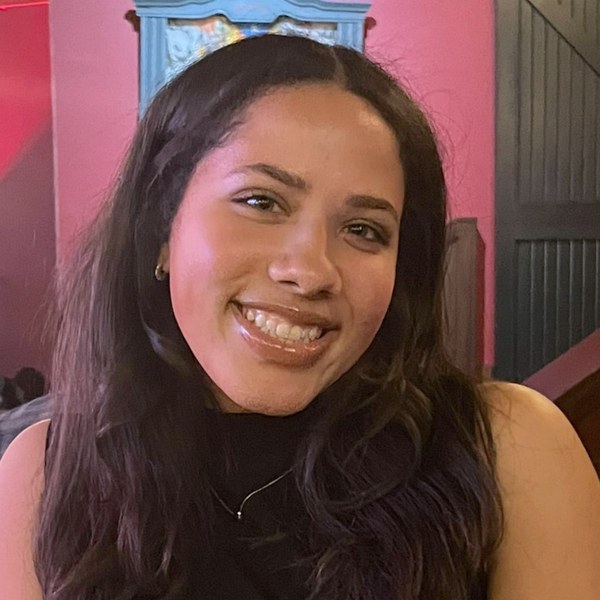 Ava Carroll
Joined in Fall 2026 on the Duchenne muscular dystrophy program,
learning the worm assays and the calcium imaging workflow.
Before you write to someone
If you are a prospective student, write to Andrés rather than to a lab member. If you are looking for a former member, the alumni page records where people went.